
 Call us now: +254 713 030 397 | Email Us: info@thehumangarage.com
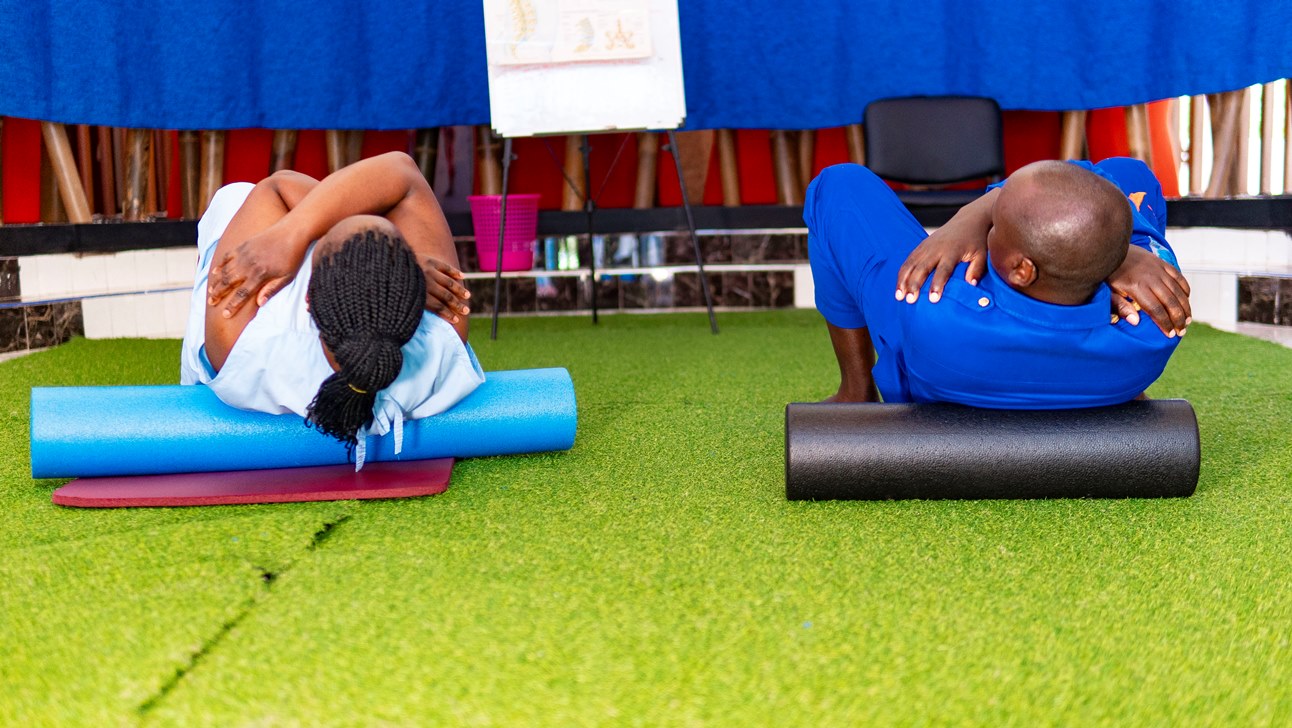
When most people think about strength, they immediately picture someone lifting heavy weights in a gym. While building muscle and increasing strength are important, true strength extends beyond what you can lift in a controlled environment. The real question is: how well can your body use that strength in everyday life?
This is where the distinction between gym strength and functional strength becomes important.
What Is Gym Strength?
Gym strength refers to the ability to generate force in a structured and controlled environment. It is typically developed through exercises such as squats, deadlifts, bench presses, shoulder presses, and other resistance-training movements.
The primary goal of gym-based strength training is progressive overload—gradually increasing the demand placed on the muscles to improve force production, muscle mass, and overall physical capacity.
Benefits of Gym Strength
- Increases muscle mass and muscular endurance
- Improves force production
- Enhances bone density
- Supports metabolic health
- Builds a strong foundation for physical performance
Gym strength is measurable and easy to track. You can quantify progress by increasing weight, repetitions, or training volume over time.
What Is Functional Strength?
Functional strength is the ability to apply strength effectively during real-world activities. It involves more than just muscular force. Functional strength incorporates mobility, stability, balance, coordination, and body awareness.
Whether you’re carrying groceries, climbing stairs, lifting a child, playing sports, or recovering from a slip, functional strength determines how efficiently your body handles those demands.
Unlike gym strength, functional strength is often expressed through integrated, multi-joint movements that require the body to work as a coordinated system.
Benefits of Functional Strength
- Improves movement efficiency
- Enhances balance and coordination
- Reduces the risk of injury
- Supports athletic performance
- Improves everyday function and independence
- Helps the body adapt to unpredictable situations
Key Differences Between Gym Strength and Functional Strength
Gym strength is generally developed in predictable environments where movement patterns are controlled and repeated. Functional strength, on the other hand, is tested in dynamic situations where the body must adapt and respond to changing demands.
For example, someone may be able to deadlift a significant amount of weight in the gym but struggle with balance, mobility, or agility during sport or daily activities. Conversely, someone may move exceptionally well yet lack the strength capacity needed to handle heavier physical demands.
Neither approach is superior on its own. They simply serve different purposes.
Why Both Matter
A useful analogy is to think of gym strength as the engine of a car and functional strength as the ability to control that car effectively.
A powerful engine is valuable, but without steering, stability, and control, its potential cannot be fully utilized. Similarly, functional movement without sufficient strength limits the body’s ability to tolerate load and perform at higher levels.
The most resilient, capable, and injury-resistant individuals typically develop both.
Strong muscles provide capacity.
Efficient movement provides application.
Together, they create a body that not only performs well but also adapts effectively to the demands of life.
The Role of Movement Quality
At The Human Garage, we often see individuals who have spent years focusing on strength training but continue to experience pain or movement limitations.
In many cases, the issue is not a lack of strength. It is a lack of movement quality.
Restricted fascia, poor mobility, compensatory movement patterns, and reduced stability can all affect how the body uses its strength. When movement efficiency improves, the body is often able to access and express strength more effectively.
This is why a complete training approach should include:
- Strength training
- Mobility work
- Stability training
- Balance and coordination exercises
- Movement pattern assessment and correction
The Bottom Line
The goal is not to choose between gym strength and functional strength.
The goal is to develop both.
Build muscle. Increase strength. Challenge your body in the gym. But also train movement quality, balance, coordination, and mobility so that your strength can be applied where it matters most—in everyday life.
Because true strength is not just about what you can lift.
It’s about how well your body moves, adapts, performs, and supports you throughout life.